The Historical Sources
Historia Brittonum
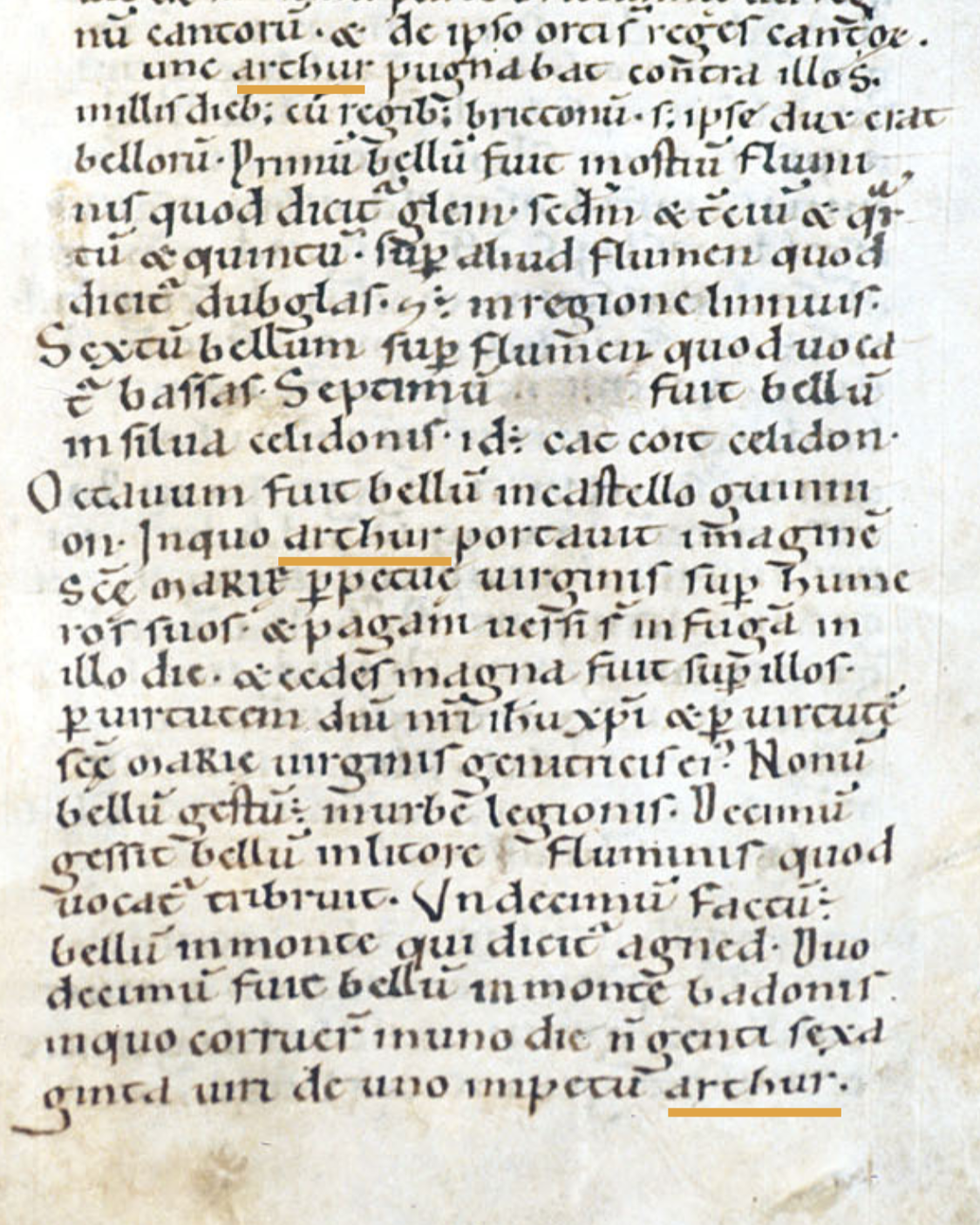
Written around AD 829, the Historia Brittonum (The History of the Britons) is an important documentary source because it contains the first written record of Arthur’s twelve battles.
The Historia Brittonum is a history of the British people that has survived in various recensions that date from after the eleventh century.
This page is taken from a copy held at the British Muesum (Harley MS 3859) and is one of the earliest surviving manuscripts. It was copied around AD 1100, roughly 270 years after the Historia Brittonum was compiled.
The document tells us that Arthur fought against ‘them’ (the Saxons) together with the kings of the Britons, but that he himself was ‘Dux Bellorum’ - Leader of Battles. This distinction is significant and central to my research and subsequent fictional representations of Arthur, because as this document records, Arthur is not a king but a battle leader.
This page of the Historia Brittonum also lists the location of the twelve battles which I have identified in my book Searching for Arthur… finding Arthwys.
Y Gododdin
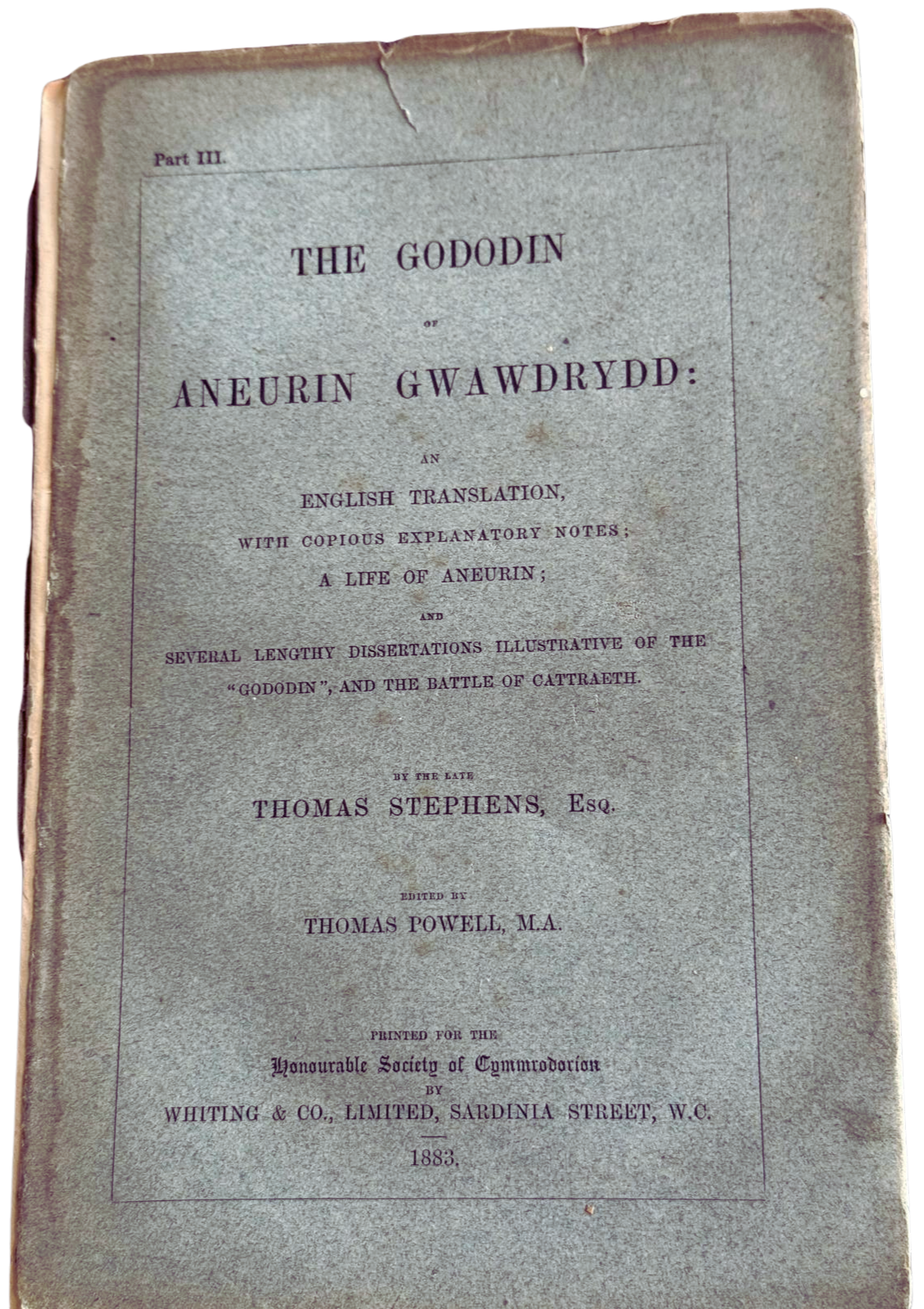
Y Gododdin is a medieval Welsh poem traditionally attributed to the poet Aneirin and contained in the thirteenth century Book of Aneirin. It includes references to Arthur and the Coeling dynasty.
The poem is a series of elegies commemorating Brittonic warriors who died in battle at Catraeth, generally thought to be Catterick in North Yorkshire around 570-600 AD. It depicts an elite warrior culture in northern Britain, describing warriors feasting before battle, riding out to fight as well as individual acts of courage.
One passage involving the warrior Gwawrddur contains an intriguing comparison as the poet notes that despite his ferocity in battle, Gwawrddur “was no Arthur.” This suggests that Arthur's reputation as an exceptional warrior was already sufficiently familiar to the poem's audience that no explanation of who he was was required.
The battle at Catraeth is often framed as the nascent Angle kingdom facing a challenge from the mighty Votadini tribe from Edinburgh, however as scholars such as Professor John Koch have noted, it is more likely to have been a confrontation between the Gododdin and Urien of Rheged. These tribes had been allies in the mid fifth century and briefly became so again to face the Saxons on Lindisfarne until Urien was murdered at the instigation of a Votadini prince called Morcant. This interpretation of the battle fits a northern political landscape where alliances were constantly shifting.